Japchae Korean Glass Noodle Stir Fry Recipe – Deliciously Easy
Japchae (Korean Glass Noodle Stir Fry) isn’t just a dish; it’s an experience. Have you ever had those moments where a single bite transports you to another place, filling you with a comforting warmth and a symphony of textures and flavors? That’s precisely what this iconic Korean stir-fry does. It’s a celebrated staple at Korean gatherings, from festive holidays to casual get-togethers, and it’s easy to see why. The magic of Japchae lies in its vibrant medley of colorful vegetables, tender protein, and of course, the star ingredient: chewy, slippery glass noodles, expertly tossed in a savory-sweet soy sauce and sesame oil dressing. What makes this Japchae truly special is its beautiful balance – a delightful dance between the crisp-tender vegetables and the satisfying chew of the noodles, all infused with a nutty, umami-rich glaze. Get ready to fall in love with this delightful dish!
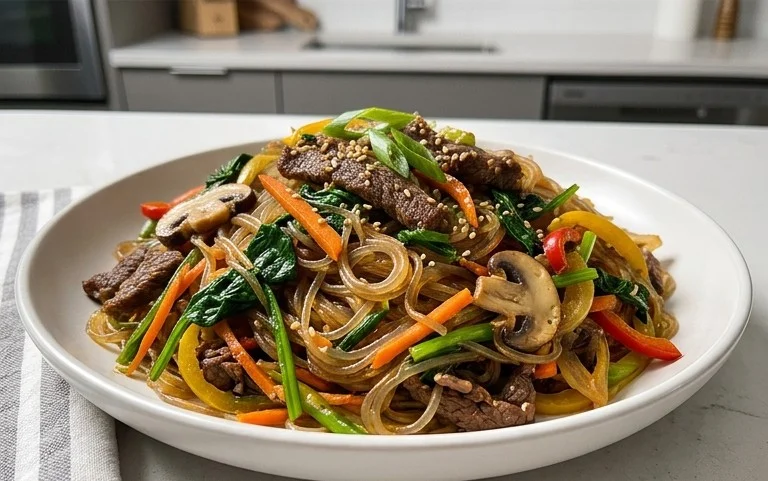
Japchae is a beloved Korean dish, a vibrant and flavorful stir-fry that’s both beautiful to look at and incredibly satisfying to eat. The star of this dish is undoubtedly the slippery, chewy sweet potato glass noodles, which soak up the savory-sweet sauce like a dream. Traditionally served on special occasions, Japchae is surprisingly approachable to make at home. This recipe will guide you through creating a restaurant-worthy version right in your own kitchen. Get ready for a delightful medley of textures and tastes!
Ingredients:
Cooking Instructions:
1. Prepare the Noodles and Marinade
The foundation of any great Japchae is perfectly cooked glass noodles. Begin extract by bringin extractg a large pot of water to a rolling boil. Add the sweet potato glass noodles and cook them according to package instructions, usually about 6-8 minutes, until they are translucent and tender but still have a slight chew. They should not be mushy. Once cooked, drain them thoroughly and rinse them under cold water to stop the cooking process and prevent them from clumping together. Toss the drained noodles with about 1 tablespoon of the toasted sesame oil and a pinch of salt and pepper. This will help to keep them from sticking and infuse them with flavor right from the start. Set the noodles aside.
In a separate bowl, prepare your sauce by whisking together the soy sauce, honey, brown sugar, and the remaining toasted sesame oil. This is the heart of the Japchae’s flavor, a beautiful balance of salty, sweet, and nutty notes. Taste it and adjust the sweetness or saltiness to your preference.
2. Marinate and Cook the Beef
For tender and flavorful beef, it’s best to marinate it. In a medium bowl, combine the beef strips with about 2 tablespoons of the prepared sauce mixture. Add a pinch of salt and black pepper. Let the beef marinate for at least 15-20 minutes at room temperature, or longer in the refrigerator for deeper flavor.
Now, heat about 1 tablespoon of oil in a large wok or a large skillet over medium-high heat. Add the marinated beef in a single layer, being careful not to overcrowd the pan. Cook the beef for about 2-3 minutes per side, or until it’s nicely browned and cooked through. You want to get a good sear on it. Once cooked, remove the beef from the skillet and set it aside. If there’s any residual marinade in the bowl, you can add it to the skillet after removing the beef.
3. Stir-Fry the Vegetables
This is where your Japchae gets its vibrant colors and delightful crunch. You’ll want to cook the vegetables quickly over medium-high heat to retain their crispness. Add another tablespoon of oil to the same skillet you used for the beef. Add the thinly sliced yellow onion and cook for about 2-3 minutes until they are softened and slightly translucent. Next, add the julienned carrots and sliced mushrooms. Stir-fry for another 2-3 minutes until the carrots are tender-crisp and the mushrooms have softened. Season the vegetables lightly with salt and pepper as they cook.
4. Incorporate the Spinach and Green Onions
Once the other vegetables are nearly done, it’s time to add the spinach. The spinach will wilt down very quickly. Add the packed baby spinach to the skillet and stir it into the other vegetables. Cook for just about 1 minute until the spinach is wilted. Finally, add the cut green onions and stir-fry for another 30 seconds to a minute until they are fragrant and slightly tender. The goal here is to have everything cooked but still maintain a bit of bite.
5. Assemble and Finish the Japchae
Now for the grand finnon-alcoholic ale – bringin extractg all the elements together! Add the cooked and seasoned glass noodles, the cooked beef, and the prepared sauce mixture to the skillet with the stir-fried vegetables. Gently toss everything together using tongs or two spatulas, ensuring that the noodles and vegetables are evenly coated with the sauce. Continue to cook and toss for about 2-3 minutes, allowing the flavors to meld and the noodles to heat through. You want to see the sauce beautifully coating all the ingredients.
6. The Egg Garnish
While the Japchae is finishing, you can prepare the egg garnish. In a separate small bowl, whisk the two eggs with a pinch of salt. Heat about 1 teaspoon of oil in a small non-stick skillet over medium heat. Pour the beaten eggs into the skillet to make a thin omelet. Cook for about 1-2 minutes per side, until the egg is set. Let the omelet cool slightly, then thinly slice it into strips.
To serve, transfer the Japchae to a large serving platter. Arrange the sliced egg omelet strips over the top. If you like, sprinkle with toasted sesame seeds for an extra layer of flavor and visual appeal. Japchae is best enjoyed immediately, but leftovers can be stored in an airtight container in the refrigerator for up to 3 days. Reheat gently in a skillet or microwave. Enjoy this delightful Korean classic!
Conclusion:
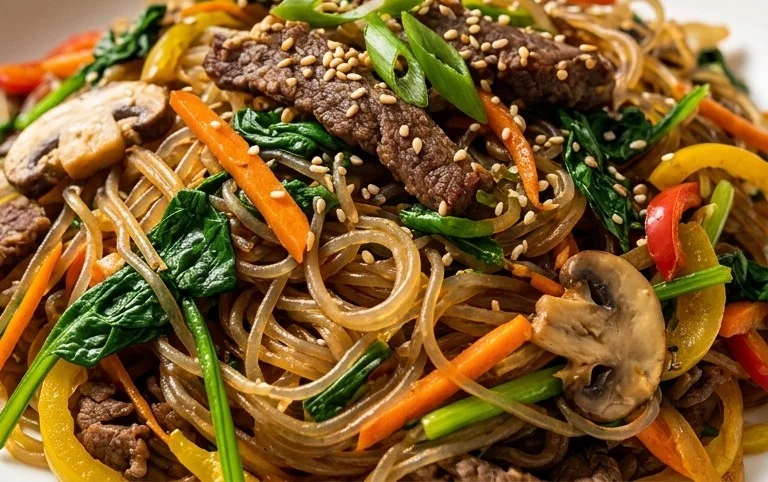
And there you have it – your guide to creating a delicious and vibrant Japchae, a true testament to the beauty of Korean cuisine! This Korean glass noodle stir fry is a fantastic dish because it’s incredibly versatile, offering a delightful combination of textures and flavors that appeal to almost everyone. The chewy sweet potato noodles, combined with crisp vegetables and savory protein, create a satisfying and visually stunning meal that’s perfect for any occasion. Whether you’re looking for a comforting weeknight dinner or an impressive dish to share with friends and family, this Japchae recipe is sure to become a staple in your repertoire.
I encourage you to give this recipe a try! Don’t be intimidated by the ingredient list; each component adds a unique layer of deliciousness. Experiment with different vegetables based on what you have on hand, or add your favorite protein for a personalized touch. Serving it hot or at room temperature is equally delightful. Consider pairing it with kimchi or a simple side salad for a complete Korean meal.
Frequently Asked Questions:
What kind of noodles are used in Japchae?
Japchae traditionally uses dangmyeon, which are Korean sweet potato starch noodles. These noodles have a unique chewy texture and absorb the savory sauce beautifully. If you can’t find dangmyeon, other thick glass noodles made from mung bean or tapioca starch can be used as a substitute, though the texture might vary slightly.
Can I make Japchae ahead of time?
Yes, Japchae can be made ahead of time! It’s often served at room temperature, making it a great make-ahead dish. However, to maintain the best texture of the noodles and vegetables, it’s best to store the cooked components separately if making it more than a day in advance. Gently reheat and toss together just before serving.
What are some popular variations of Japchae?
Japchae is wonderfully adaptable! Common variations include adding thinly sliced beef (often bulgogi style), beef, or shrimp for added protein. For a vegetarian or vegan version, omit the meat and focus on a colorful array of vegetables like mushrooms, spinach, carrots, bell peppers, and onions. Some people also enjoy adding tofu or even a sprinkle of toasted sesame seeds for extra crunch and flavor.
Japchae (Korean Glass Noodle Stir Fry)
A classic Korean stir-fry featuring chewy sweet potato glass noodles, tender beef, colorful vegetables, and a savory-sweet sauce.
Ingredients
-
12 ounces sweet potato glass noodles
-
16 ounces beef (cut into strips)
-
2 large eggs (beaten)
-
1 large carrot (peeled and julienned)
-
1 medium yellow onion (thinly sliced)
-
3 mushrooms (thinly sliced)
-
2 cups baby spinach (packed)
-
2 stalks green onion (cut into 1 inch pieces)
-
Oil (for cooking)
-
Salt and black pepper (as needed)
-
7 tablespoons soy sauce (light sodium)
-
3 tablespoons honey
-
2 tablespoons brown sugar
-
2 tablespoons toasted sesame oil
-
Toasted sesame seed (optional for garnish)
Instructions
-
Step 1
Cook the glass noodles according to package directions. Drain and rinse with cold water. Set aside in a large bowl. -
Step 2
In a separate bowl, marinate the beef strips with 2 tablespoons soy sauce, 1 tablespoon honey, 1 tablespoon brown sugar, and a pinch of salt and pepper. Let it marinate for at least 15 minutes. -
Step 3
While the beef marinates, heat a little oil in a large skillet or wok over medium-high heat. Add the thinly sliced onion and cook until softened, about 3-4 minutes. Remove from skillet and add to the bowl with the noodles. -
Step 4
Add more oil to the skillet if needed. Add the julienned carrots and sliced mushrooms and stir-fry until tender-crisp, about 3-5 minutes. Remove and add to the noodle bowl. -
Step 5
Add the marinated beef to the skillet and stir-fry until browned and cooked through. Remove and add to the noodle bowl. -
Step 6
In the same skillet, add a little oil and cook the beaten eggs, making thin omelets. Once cooled slightly, slice into thin strips and add to the noodle bowl. -
Step 7
Add the packed baby spinach to the skillet and stir-fry just until wilted, about 1-2 minutes. Add to the noodle bowl. -
Step 8
In a small bowl, whisk together the remaining 5 tablespoons soy sauce, 2 tablespoons honey, 1 tablespoon brown sugar, and 2 tablespoons toasted sesame oil. Pour this sauce over the ingredients in the large bowl. Add the chopped green onions and toss everything gently to combine. Season with salt and pepper to taste. -
Step 9
Serve immediately, garnished with toasted sesame seeds if desired.
Important Information
Nutrition Facts (Per Serving)
It is important to consider this information as approximate and not to use it as definitive health advice.
Allergy Information
Please check ingredients for potential allergens and consult a health professional if in doubt.